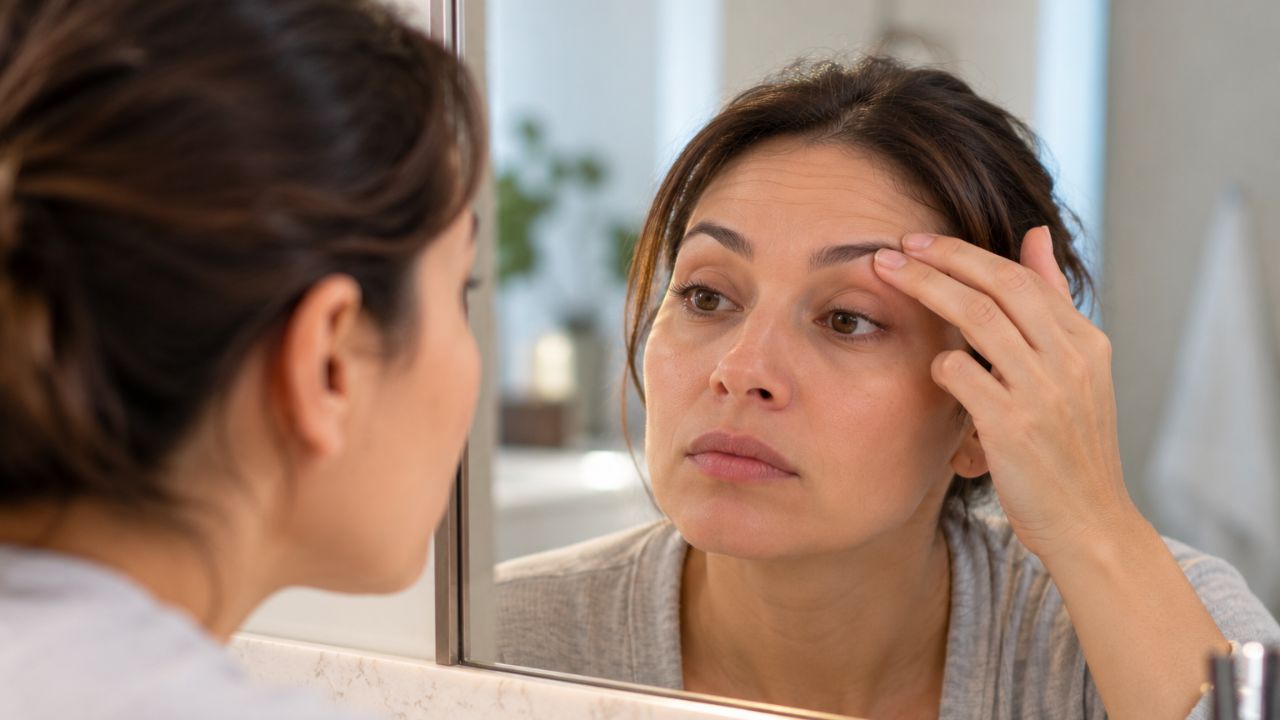
Tired Eyes or Heavy Lids? When Eyelid Surgery Is the Answer
People often say they look tired when they feel fine. The cause may be the upper eyelids, where loose skin folds over the lash line, or the lower lids, where bags have formed. Eyelid surgery can help, but only when the problem is truly in the eyelid, and a good surgeon will tell you when it is not.
What makes eyes look tired
Several changes combine. The skin of the upper lid stretches with age and sun exposure, and a fold can hang over the lashes, shortening the visible lid and creating a hooded look. Fat may bulge from the lower lid, forming bags, while the cheek below loses volume and deepens the hollow.
The brow matters as much as the lid. When the brow sinks, it pushes skin down onto the eyelid, so a heavy look can come from the forehead rather than the eyelid. Correcting the lid alone then leaves the cause in place.
Genetics, sleep, allergies and thyroid conditions also play a part. A consultation should therefore begin with a careful look at the whole upper face, and at your medical history, before any operation is proposed. It should also cover how long the heaviness has been present, whether it varies through the day, and if your vision is affected, because those details help to decide between cosmetic and medical causes. The practice of Jonathan Dunne, a consultant plastic surgeon, describes the operation on its page for Dr Dunne's upper blepharoplasty, and the points below draw on it.
What upper eyelid surgery does
Upper blepharoplasty corrects the heavy, hooded look. The practice page on the operation states that it removes excess skin and, where volume has been lost, repositions or grafts fat to restore a natural eyelid crease. It says that the operation takes about 45 to 60 minutes.
The page also recognizes the link between lid and brow. It describes a combination of upper blepharoplasty and a brow lift as a way of recognizing the continuum of the upper eyelid and brow, which suits people whose brow has dropped as well.
The incision lies in the natural crease of the upper lid, where the scar is usually well hidden. The operation changes the shape of the lid and does not change the colour or shape of the eye itself, a point worth stating to anyone with unrealistic hopes. Be wary of promises about dramatic change. Subtle, natural results are a better goal for most people.
What the NHS says
The NHS explains in its page on eyelid surgery that blepharoplasty is cosmetic surgery to remove excess skin or fat from the eyelids and that it changes the look of hooded or drooping eyelids or eye bags. It advises people to be sure about their reasons, and to bear in mind the cost, the risks and the fact that results cannot be guaranteed.
It also says the operation may take around 45 minutes to two and a half hours, that most people can go home the same day and that most take about two weeks off work. It notes that independent clinics and hospitals providing cosmetic surgery in England must be registered with the Care Quality Commission.
That is useful background. A patient can check a clinic's registration and inspection report before booking, and can ask what the quoted operating time includes.
The NHS position is worth knowing too. Hospital patient information explains that blepharoplasty can be funded by the NHS when the excess skin affects vision, assessed by an examination and visual field tests, and that it is not funded when it is done for cosmetic reasons. People who notice that heavy lids narrow their field of view when driving or reading should mention it to a GP, since a medical case may exist.
Risks, recovery and realistic results
Common effects after surgery are puffy, numb eyelids that are hard to close, bruising and irritated, watery eyes that may last a few weeks. The NHS says occasional problems include blurred or double vision, uneven eyes and noticeable scarring, and that some people feel the desired effect was not achieved and need another operation.
Rare complications include bleeding behind the eye, which threatens sight and needs urgent attention, dry eye and difficulty closing the eye fully. Severe pain or any change in vision after surgery needs same-day contact with the surgeon or the emergency services.
Results last for years, but ageing continues. The lid will not stay as it was on the day of surgery, and sun exposure, smoking and weight changes all affect the outcome. Agree in advance what a good result looks like. Bring photographs of yourself at an earlier age, since they show better than words what you consider your natural look.
Is it right for you?
Good candidates have loose skin on the upper lids or bags below the eyes, are in good general health, do not smoke, and have realistic goals. People with dry eye, thyroid eye disease or certain medical conditions need more careful assessment.
A surgeon should examine the brow, the lids, tear production and eyelid support, and may photograph the area. If a brow lift or a lower lid procedure would serve you better, or if non-surgical treatment would be enough, that should be said plainly.
Take time to decide. Many professional bodies advise a cooling-off period of at least two weeks between consultation and consent for major cosmetic surgery, and a second consultation is reasonable. Ask about cost, aftercare and who to call if something feels wrong. Smokers should stop well before surgery, because smoke impairs healing, and anyone taking blood-thinning medicine must tell the surgeon so that the risk of bleeding can be planned for.